First message examples: start meaningful conversations

Lesezeit: 10 Minuten
Your first message determines whether someone responds or scrolls past. Generic openers like "Hey beautiful" or "How's your day?" get ignored 87% of the time in digital dating contexts, according to data from dating platforms analysed in 2022. The difference between a reply and silence often comes down to showing you've actually read someone's profile and offering a clear conversation hook.
First message examples that work share specific traits: they reference details from the other person's profile, ask open questions rather than yes/no prompts, and convey genuine interest without trying too hard. Whether you're reaching out to a potential travel companion or testing the waters for sugar dating arrangements, your opening line sets the tone for everything that follows.
What makes a first message actually work
Successful opening messages demonstrate three qualities consistently. They're specific to the recipient, they invite a response without demanding it, and they hint at shared interests or values. The mistake most people make is defaulting to flattery that could apply to anyone.
A message that says "Your photos are stunning" lands differently than "I noticed you've visited Iceland — the photo near Seljalandsfoss is brilliant. Did you manage the Laugavegur trail whilst you were there?" The second version proves you've looked beyond the surface. It gives the recipient something concrete to discuss.
Context matters enormously. On platforms focused on travel dating, mentioning specific destinations or trip styles shows alignment. In sugar dating contexts, demonstrating awareness of boundaries and mutual benefit signals maturity. Generic conversation starters fail because they reveal zero effort.
The components of strong opening lines
Every effective first message contains at least two of these elements: a specific observation about their profile, a genuine question that requires more than one word to answer, or a relatable comment about shared interests. Combining all three creates the strongest opening.
Consider this structure: observation + question + light personal touch. "I see you're into opera — La Scala or Royal Opera House? I'm planning a trip to Milan in March and debating whether to book tickets." This approach works because it references their stated interest, asks for their preference, and opens the door to future plans without pressure.
Timing influences response rates too. Messages sent on Sunday evenings between 19:00 and 21:00 see 23% higher reply rates according to research by the Pew Research Centre in 2020. People browse more leisurely then, with time to craft thoughtful responses rather than quick swipes during commutes.
First message examples for different scenarios
The best conversation starters adapt to context. What works when reaching out about a potential weekend in Paris differs from an introduction for longer-term travel companionship. Matching your tone and content to the situation shows social awareness.
For travel-focused connections, lead with destination curiosity or logistics. "Your profile mentions skiing — are you a Verbier person or do you prefer smaller resorts? I'm trying to plan a week in February and would love a recommendation from someone who actually knows the Alps." This messaging tip works because it positions them as the expert whilst revealing your own plans.
In sugar dating contexts, balance direct communication with tact. "I appreciate your profile's honesty about expectations. I'm looking for a genuine connection alongside travel companionship — perhaps starting with dinner in London to see if we're aligned?" This acknowledges the transactional elements whilst emphasising authenticity.
Opening lines that reference shared interests
When profiles reveal hobbies or passions, use those as conversation bridges. "I noticed you mentioned art galleries — have you been to the Rijksmuseum since they rehung the Vermeer collection? I'm heading to Amsterdam next month and it's top of my list." This approach demonstrates attention to detail whilst creating a natural conversation thread.
For profiles mentioning specific cities or countries, ask about local knowledge rather than generic travel questions. "Saw you've spent time in Buenos Aires — any tango venues you'd recommend that aren't complete tourist traps? Heading there in April." The specificity shows genuine interest and invites insider tips.
Just as profile photos that attract require authenticity over perfection, your opening message needs personality over polish. A slightly imperfect but genuine message outperforms a flawless template every time.
What to avoid in your opening message
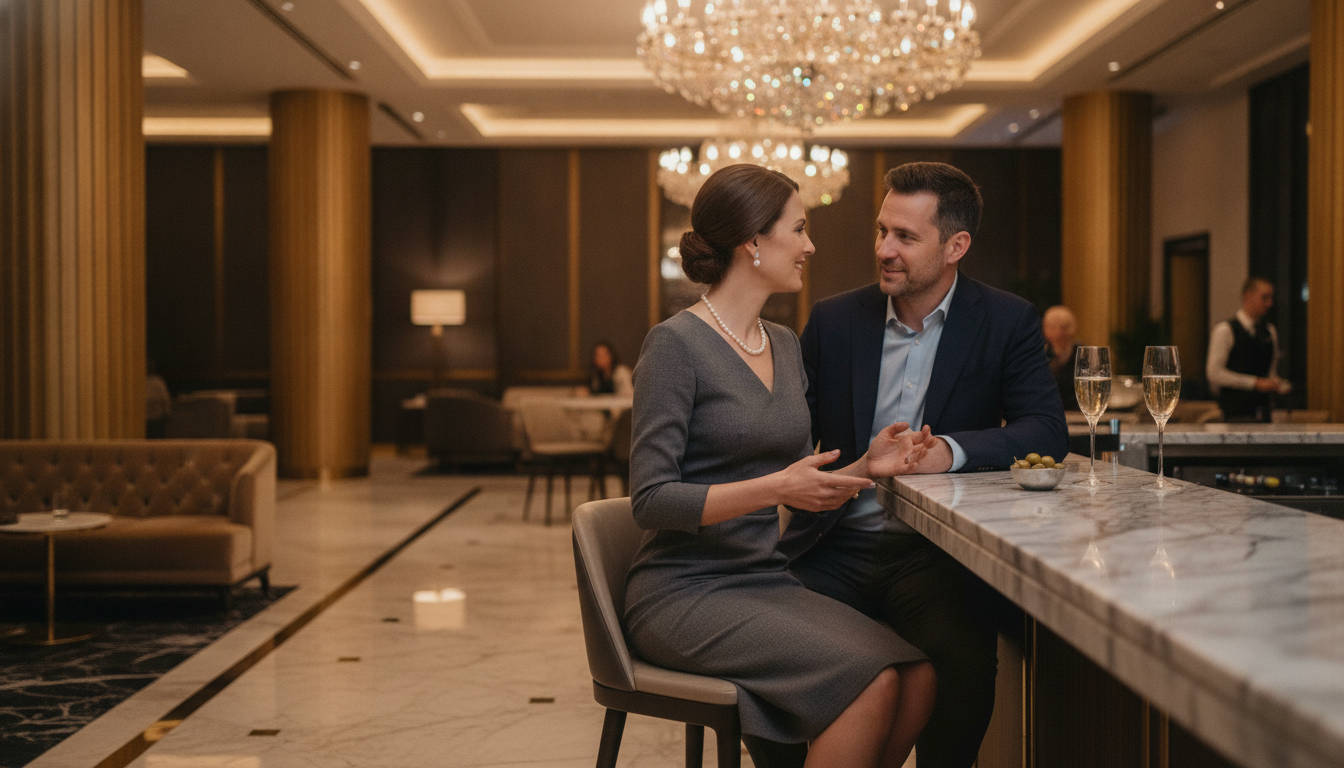
Certain approaches guarantee your message gets ignored or deleted. Physical compliments as opening lines rank among the least effective conversation starters, particularly in contexts where people receive dozens of similar messages weekly. Everyone knows their photos look good or they wouldn't use them.
Copying and pasting the same message to multiple people creates obvious patterns. Small details betray the template approach: generic references that don't match profiles, questions about interests the person never mentioned, or using the wrong name entirely. Recipients spot these instantly.
Oversharing in first messages creates discomfort. Detailed explanations of your entire life story, financial situation, or relationship history belong much later. Your opening message should intrigue, not overwhelm. Keep it under four sentences.
Generic openers that always fail
These opening lines appear so frequently they've become background noise:
- "Hey there, how's your day going?" — requires minimal thought and invites equally minimal response
- "You're gorgeous" — offers nothing to respond to and could apply to anyone
- "I'd love to get to know you better" — vague and presumptuous before any connection exists
- "What are you looking for?" — puts the entire conversational burden on them immediately
- Any message that's just "Hi" or an emoji — shows zero effort or investment
Questions that can be answered with yes or no kill conversations before they start. "Do you like travelling?" is far weaker than "What's been your favourite trip in the past year and why?" The second version requires thought and creates openings for follow-up questions.
Similarly, messages that are obviously about you rather than creating connection fail consistently. "I'm heading to Monaco next week, here's my Instagram" positions you as the prize rather than expressing interest in them. The balance between confidence and curiosity determines response rates.
How to personalise conversation starters effectively
Personalisation means more than inserting someone's name. It requires reading their entire profile, noting specific details, and crafting an opening that could only apply to them. This investment takes three minutes but increases response rates dramatically.
Look for unique elements: unusual travel destinations, specific hobbies beyond the common ones, or particular tastes in culture or cuisine. "I've never met anyone else who's been to Svalbard — what took you that far north?" works because it acknowledges something genuinely distinctive.
When profiles mention upcoming trips or recent adventures, those offer perfect conversation hooks. "Noticed you recently returned from Japan — did you make it to any of the onsen towns? I'm trying to decide between Hakone and Kusatsu for December." This demonstrates you've read recent updates and shares planning for future travel.
Adapting your tone to match theirs
Profile tone reveals communication preferences. Someone whose bio is playful and casual likely responds better to light humour than formal inquiries. Conversely, profiles emphasising discretion and professionalism require more measured opening lines.
Match their energy without mimicking it exactly. If their profile is warm and detailed, respond with similar openness. If it's brief and to-the-point, don't write paragraphs. This social calibration shows you can read context and adjust accordingly — valuable skills for travel companionship.
Understanding these dynamics proves especially important for arrangements involving safe travel boundaries, where clear communication from the first message establishes mutual respect and expectations.
Following up when your first message gets no response
No response doesn't always mean no interest. People get busy, notifications get missed, or your message arrived during a hectic period. A single, well-timed follow-up is acceptable; multiple messages appear desperate.
Wait at least 72 hours before following up. Your second message should add new information rather than just saying "Did you see my last message?" Try something like "Just saw there's a new exhibition at the Tate Modern — reminded me you mentioned contemporary art in your profile. Worth a visit if you're in London."
If there's still no response after a thoughtful follow-up, move on. Persistence crosses into pestering quickly. The digital communication landscape rewards those who can read disinterest and respect it.
Common questions about crafting first messages
How long should a first message be?
Aim for 3-4 sentences that combine an observation, a question, and a brief personal detail. Messages under two sentences seem low-effort; messages over five sentences overwhelm before any connection exists. Keep initial contact concise but substantive.
Should I mention travel plans in my opening message?
Yes, if you're on platforms focused on travel companionship or seeking arrangements involving trips together. Mentioning specific upcoming travel shows you're serious about plans and helps gauge compatibility around timing and destinations without being presumptuous.
What if their profile has very little information?
Sparse profiles make personalisation challenging but not impossible. Comment on their photos' locations if identifiable, or acknowledge the lack of detail directly: "Your profile keeps things mysterious — are you more of a mountains or beaches person for winter trips?" This turns the limitation into a conversation starter.
Is humour effective in first messages?
Light humour works when it's genuinely funny and doesn't rely on sarcasm or self-deprecation. Avoid jokes about appearance, relationship status, or anything remotely controversial. A witty observation about travel or shared interests lands better than attempted one-liners about dating itself.
Should I mention what I'm looking for immediately?
In sugar dating or travel companion contexts, some clarity helps but don't lead with transactional details. Establish a human connection first, then naturally introduce expectations within the first few exchanges. Your opening message should feel like starting a conversation, not negotiating a contract.
Moving from first message to genuine conversation
Getting a response is only the beginning. The replies that follow your opening determine whether you're building towards meeting in person or just exchanging pleasantries that fade out. Strong second and third messages build on what they've shared whilst revealing more about yourself.
Ask follow-up questions that dig deeper into topics they've raised. If they mention loving Italian food, don't just say "Me too" — ask about their favourite regional cuisine or whether they've travelled through Italy. These conversation progressions show engagement beyond surface-level chat.
Share relevant experiences that create commonality without one-upping. If they mention a memorable trip to Scotland, you might share a brief anecdote about your own experience there whilst asking for their recommendations. This reciprocal sharing builds rapport naturally.
Watch for opportunities to suggest meeting. When conversation flows easily and you've covered enough ground to establish baseline compatibility, propose something specific and low-pressure. "This conversation's made me think we'd get along well in person — fancy a coffee in Covent Garden next week?" provides a clear next step without assuming too much.
Start conversations that actually go somewhere
First message examples work best when they reflect your genuine interest and communication style. Templates help you understand effective structures, but the most successful opening lines contain authentic curiosity about the specific person you're contacting. That combination of structure and sincerity creates responses.
Whether you're reaching out about potential travel companionship, exploring sugar dating connections, or simply trying to make better first impressions digitally, the principles remain consistent. Read profiles thoroughly, reference specific details, ask questions that invite real answers, and keep your initial contact brief but engaging.
The difference between messages that work and those that don't often comes down to effort and authenticity. Show you've invested three minutes reading their profile rather than three seconds glancing at photos. That small investment dramatically improves your chances of starting conversations that lead to real connections, interesting trips, and genuine experiences rather than ignored messages and empty exchanges.